
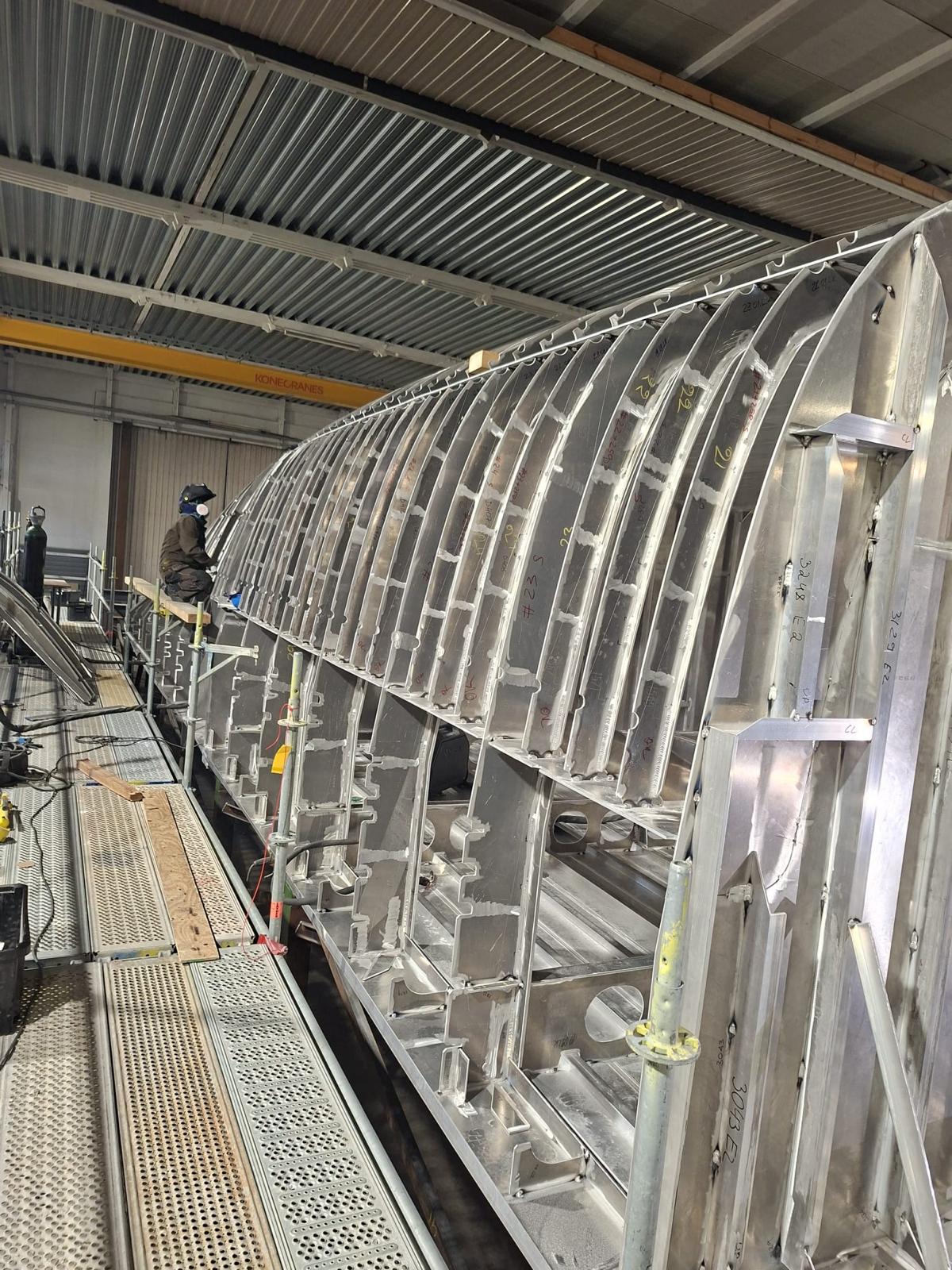
PASSER has commenced construction of two aluminium ship hulls for a Finnish customer, marking a strategic expansion into aluminium marine fabrication. The project is underway at a customer shipyard in Olkiluoto, Finland, and represents a significant milestone as the company broadens its shipbuilding expertise beyond traditional carbon steel construction.
Aluminium Shipbuilding Marks New Strategic Direction for 2025
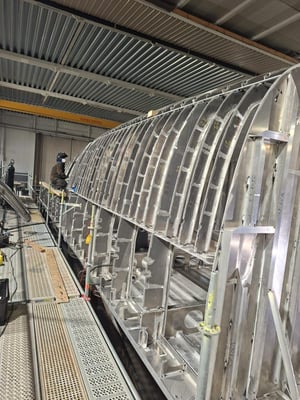
In 2025, PASSER set out to develop aluminium vessel construction capabilities alongside its established steel fabrication services. The Finnish passenger vessel project is the first result of that strategy, and it signals the company's commitment to serving the growing market for lightweight marine vessels.
PASSER is responsible for fabricating both aluminium hulls according to customer-supplied drawings, with work taking place on-site at the Finnish shipyard. While engineering, material delivery, outfitting, and interior work fall outside PASSER's scope on this contract, the aluminium hull fabrication itself demands specialised expertise that the company has deliberately built through careful recruitment and investment in qualified personnel.
The distinction between steel and aluminium fabrication matters more than many people realise. Aluminium welding requires different techniques, stricter process controls, and welders with specific certifications. The material's low melting point, high thermal conductivity, and sensitivity to contamination mean that poor technique shows up immediately as porosity, cracking, or warped panels. PASSER assembled a dedicated team of qualified aluminium welders, experienced fitters, and foremen who understand the particular challenges of marine-grade aluminium assembly.
Why Aluminium Hull Construction Matters for Passenger Vessels
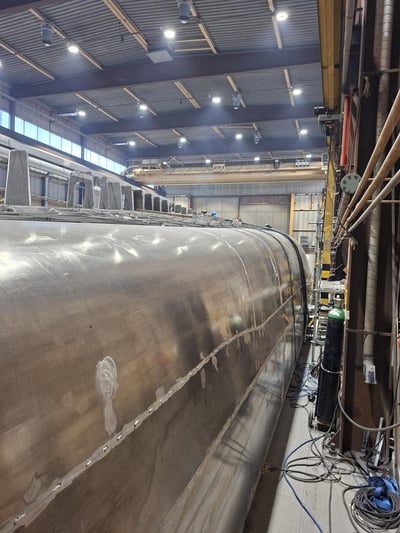 Aluminium hulls offer several practical advantages that make them increasingly attractive for passenger vessel operators. The material weighs approximately one-third as much as steel at comparable thicknesses, which directly affects fuel consumption, speed, and cargo capacity throughout the lifetime of the vessel. For operators running passenger services on regular routes, these efficiency gains compound into meaningful operational savings over years of service.
The corrosion characteristics of aluminium also differ substantially from steel. Aluminium naturally forms a protective oxide layer when exposed to air, providing inherent resistance to saltwater corrosion without the constant cycle of inspection, preparation, and repainting that steel hulls require. This translates to lower maintenance costs and longer operational lifespans, with properly maintained aluminium hulls routinely exceeding twenty years of service.
Marine-grade aluminium alloys such as the 5083 series have become the standard for hull construction because they offer the right combination of weldability, strength, and corrosion resistance for demanding maritime applications. These alloys maintain their mechanical properties after welding and perform reliably in saltwater environments over decades of continuous operation.
Qualified Aluminium Welding Personnel Drive Project Success
The success of any aluminium fabrication project depends on the people doing the work. PASSER recognised early that the Finnish project would stand or fall based on personnel quality, and the company made this a priority from the outset.
The team assembled for this project includes welders qualified to EN ISO 9606-1 standards for aluminium, along with fitters experienced in marine-grade aluminium assembly and foremen capable of managing aluminium-specific production sequences. The welding management system is certified to EN ISO 3834-2, ensuring that procedures, supervision, and inspection meet international requirements for quality-critical welding operations.
This investment in qualified personnel reflects a broader strategic capability. Once established, aluminium fabrication expertise opens doors to the growing market for lightweight vessels across multiple sectors, including crew transfer vessels for offshore wind, fast ferries, and workboats, where weight reduction delivers measurable operational advantages.
PASSER's Shipbuilding Track Record Provides Foundation for Aluminium Hull Fabrication
The aluminium hull project builds on PASSER's existing track record in vessel construction and marine fabrication. The company has delivered complete ships, including the cement carrier FLORVIK, a 90-metre vessel built in eleven months for Royal Bodewes, and the service vessel RUNA, a 25-metre twin-hull catamaran delivered as a turnkey project in ten months. Hull fabrication projects include the cargo ferry HAWAIKINUI 2, where PASSER built the hull, superstructure, and piping systems.
This experience in large-scale marine fabrication provides the project management capability, quality systems, and production methodology that transfer directly to aluminium construction. The underlying disciplines of dimensional control, welding quality, and assembly sequencing remain consistent across materials, even as the material-specific techniques differ.
PASSER operates fabrication facilities in Klaipėda, Lithuania, with deep-water quays and direct access to Baltic shipping routes. The Klaipėda workshops expanded significantly with new facilities opened in 2023, providing more than 8,000m² of production floor space with 100-tonne crane capacity and 16-metre quay depth for loading finished products directly onto vessels.
Marine Fabrication Certifications and Quality Standards
Quality certifications matter in shipbuilding because classification societies and vessel owners require documented evidence that fabrication meets recognised standards before they will accept delivery of a vessel or structure. PASSER holds a comprehensive set of certifications relevant to aluminium and steel marine fabrication work.
Key Certifications
- ISO 9001 quality management, certified by DNV-GL
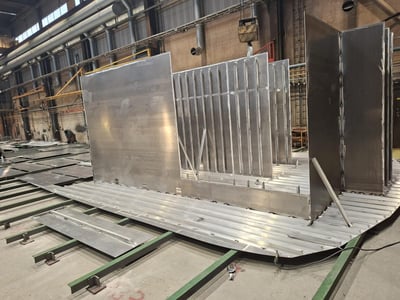
- EN 1090-2 EXC4 structural fabrication at the highest execution class
- EN ISO 3834-2 welding management system, certified by KIWA
- ISO 14001 environmental management, certified by DNV-GL
- ISO 45001 health and safety management, certified by DNV-GL
- Workshop approval by RINA Services S.p.A for maritime fabrication
These certifications provide the foundation for aluminium hull fabrication work, with the procedures and systems developed for steel fabrication adapting to aluminium through appropriate modifications for the material's different characteristics.
Carbon Steel and Aluminium Fabrication as Complementary Capabilities
PASSER's established expertise lies in carbon steel fabrication, where the company has built reels, carousels, and other heavy cable handling equipment for decades. The move into aluminium does not replace this capability but extends it to serve a broader range of customer requirements.
Some projects will continue to require steel construction where the strength-to-cost ratio matters more than weight savings. Heavy-duty offshore equipment, storage carousels, and industrial structures typically favour carbon steel for sound technical and economic reasons. Other applications, particularly vessels where fuel efficiency and payload capacity drive the economics, benefit from aluminium construction even at higher material costs.
Offering both materials allows PASSER to advise customers on the appropriate choice for their specific application rather than defaulting to a single solution. For customers building mixed fleets or equipment with both steel and aluminium components, working with a single supplier simplifies procurement and ensures consistent quality standards across materials.
Growing Market Demand for Lightweight Aluminium Vessels
The timing of this capability expansion aligns with growing demand for lightweight vessels across several sectors that PASSER already serves or is well-positioned to enter.
The offshore wind industry continues to drive demand for crew transfer vessels, service operation vessels, and other lightweight craft that make multiple daily transits where fuel efficiency is critical to operating economics. Ferry operators across Europe are renewing their fleets with more efficient tonnage as older vessels reach the end of their lives and environmental regulations tighten. Workboat operators need durable, low-maintenance aluminium hulls that perform reliably in demanding conditions over many years of service.
Each of these market segments favours aluminium construction for appropriate vessel sizes and applications, and PASSER's new aluminium hull fabrication capability positions the company to compete for this work alongside its established steel fabrication and shipbuilding services.
Aluminium Hull Fabrication Project Sets Foundation for Future Growth
The Finnish passenger vessel project establishes PASSER's aluminium fabrication capability with a tangible reference that demonstrates the company can recruit qualified people, manage aluminium-specific production processes, and deliver marine-grade construction to customer specifications. Successfully completing two aluminium hulls provides the foundation for pursuing additional lightweight vessel work as market opportunities develop.
Reach out to discuss your Project
Whether you are planning an aluminium vessel build, exploring lightweight marine construction options, or looking for a fabrication partner with proven shipbuilding credentials, PASSER's team is ready to discuss your requirements.
We offer aluminium and steel fabrication, hull construction, and complete shipbuilding services through our facilities in Lithuania and the Netherlands. Our engineering teams can support projects at any stage from early feasibility through to delivery.
Contact
Aivaras Kamas
Chief Executive Officer
a.kamas@passer-sidc.com
Mob.: +370 60595120